Human approval is not a safety feature. It is the product.
People sometimes ask when we will let agents publish directly. Never — and this post explains why that is a design decision, not a limitation.
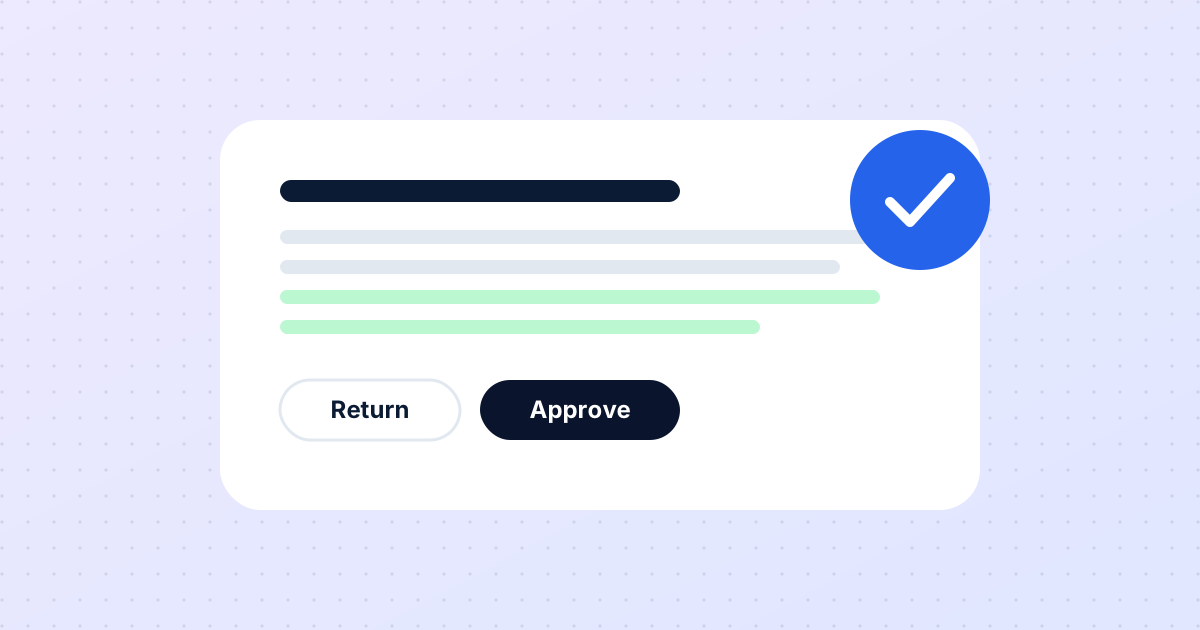
A recurring question in early conversations: "Once we trust the drafts, can we turn off approval?" The short answer is no. The longer answer is that approval is not a brake we bolted on to a fast car. It is the reason the car can be fast.
What documentation is
Documentation is a set of statements your organisation makes about how its product behaves, what its policies are and what it promises. Customers plan around it. Regulators read it. Contracts reference it. When it is wrong, the cost is not an embarrassing typo; it is a support ticket at best and a compliance problem at worst.
Agents are very good at producing accurate drafts from good sources. They are not the party accountable for what your organisation says. That accountability sits with a person, and the approval step is where it is exercised.
Why approval makes agents more useful, not less
Without a review gate, every agent action carries the full risk of being wrong in public. Teams respond by restricting what agents may touch — low-stakes pages only, small edits only — and the value of the system shrinks accordingly. With a gate, the agent can propose anything: a full rewrite of a policy, a new section on a sensitive feature, a correction that contradicts a page the CEO wrote. The proposal costs nothing if it is wrong, because a person will catch it. Approval expands the agent's range.
Making review cheap
Approval only works if it is fast. We invest heavily in what the reviewer sees: the current page and proposed change side by side, a plain reason for the trigger, every cited source one click away, conventions and organisational details already applied. Most approvals take under a minute. "Edit and approve" exists so that a reviewer who would phrase something differently fixes it in place rather than returning it.
What we track
Every approval, edit and return is logged with who, when and what changed. Admins can see approval times, return rates by document set and which reviewers are overloaded. The audit trail is exportable for compliance reviews. It also, over time, shows where agents most often need correction, which is exactly the feedback that improves the drafts.
The principle
Agents do the heavy lifting. People decide whether it is right. We wrote that sentence on the first day and have not found a reason to change it.
More from the blog
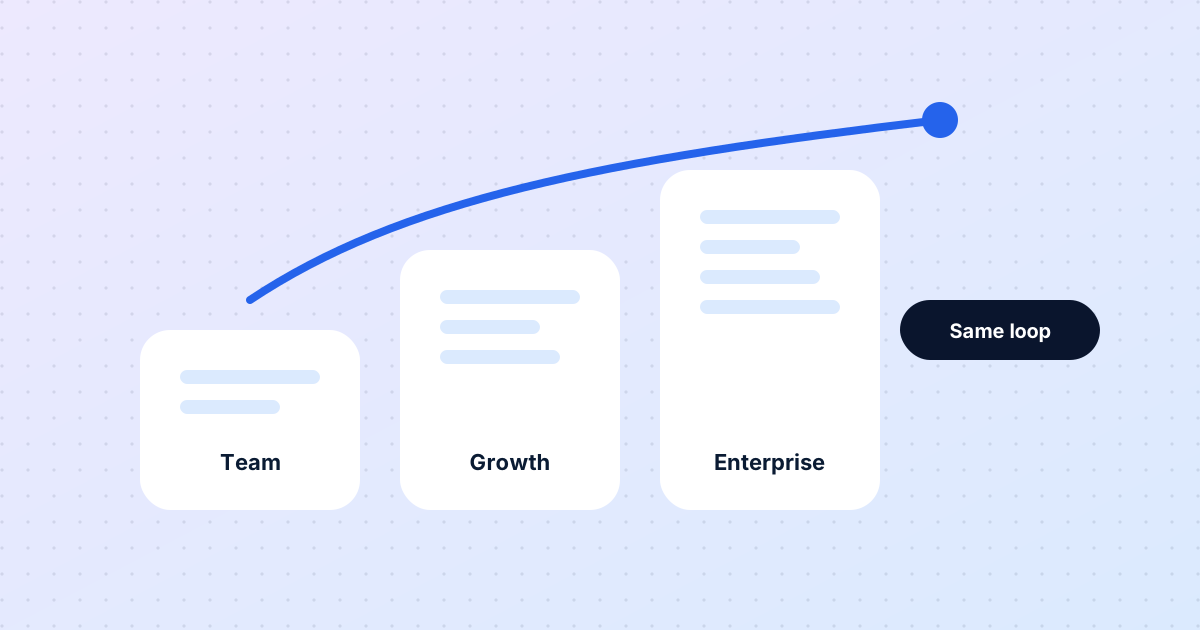
The same loop for five people or five thousand
Eight months in, a look at what has stayed constant as DocOpsly has grown from founding teams to enterprise programmes — and what changes with scale.
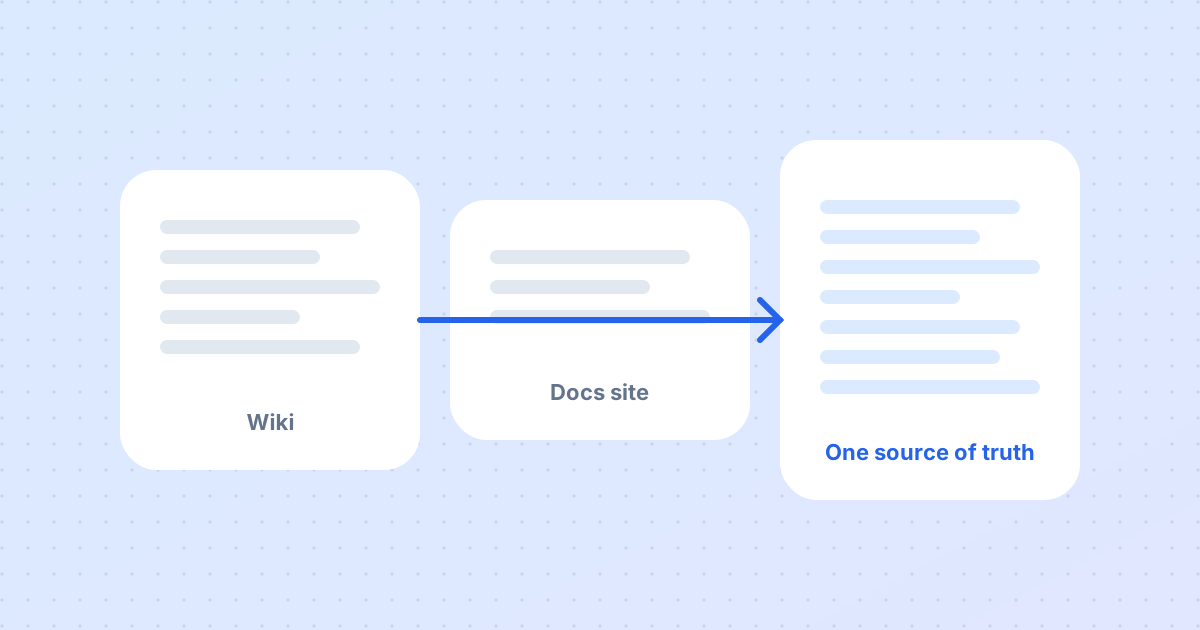
Migrating to DocOpsly without rewriting a single page
The most common worry from new customers is that migration means regenerating everything. It does not. Here is what actually happens in the first two weeks.
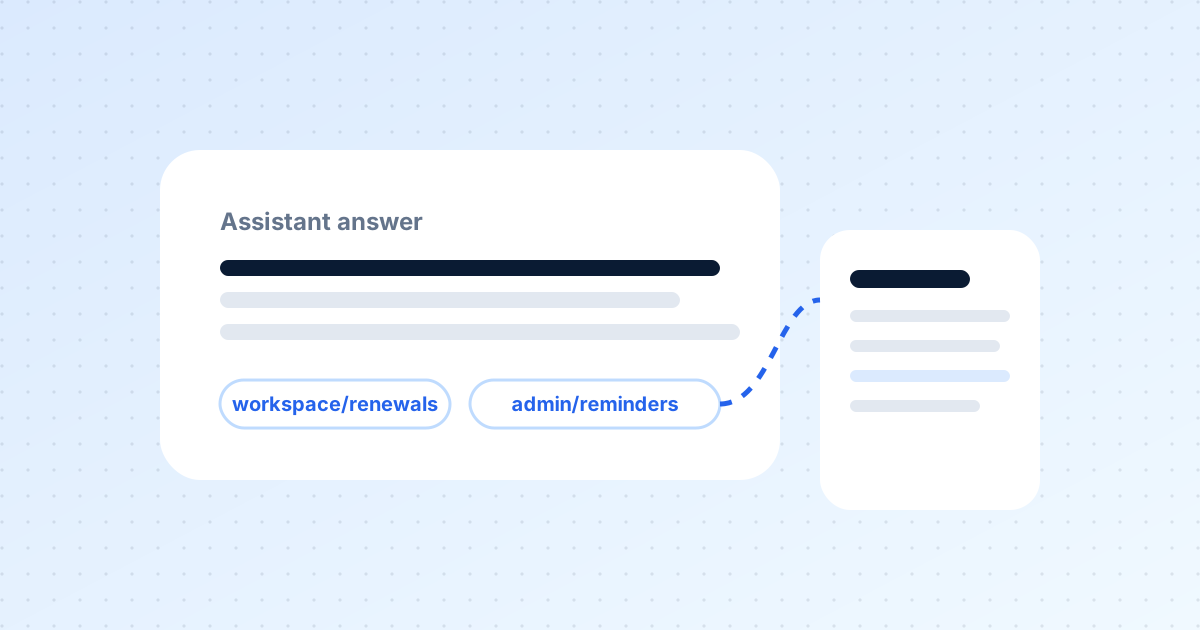
Documentation your assistants can actually trust
Support bots, internal helpdesks and content tools all read your docs. If the docs are stale, they amplify the error. Here is how citations change that.
Want this for your documentation?
Tell us about your product and how docs are handled today.
Contact us