The same loop for five people or five thousand
Eight months in, a look at what has stayed constant as DocOpsly has grown from founding teams to enterprise programmes — and what changes with scale.
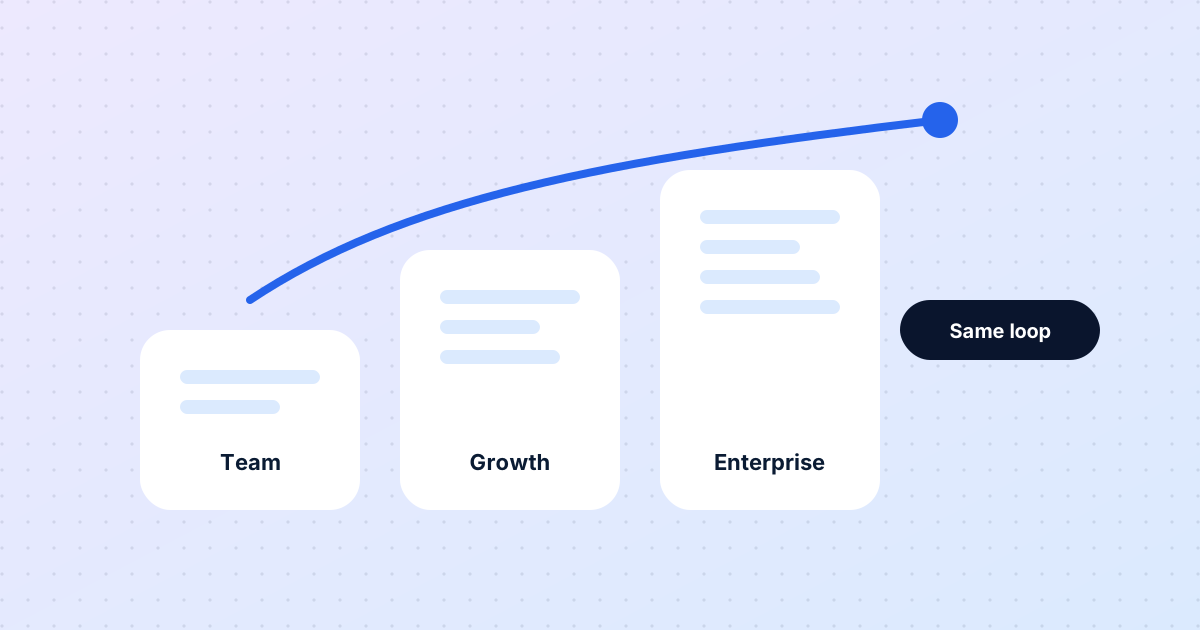
DocOpsly was founded in January 2026 with a single idea: agents produce and maintain documentation, humans verify and approve. Eight months later that pattern has run for founding teams with one product and for programmes spanning multiple products, regions and legal entities. This post is about what stayed the same and what did not.
What stayed the same
The loop. Trigger, read, draft, review, publish. A five-person team and a five-thousand-person organisation run exactly the same steps. The difference is volume, not shape.
Mandatory approval. No customer, at any size, publishes without a human sign-off. Larger organisations tend to want more gates, not fewer.
The source of truth. Existing documentation is always the reference. Nobody has asked us to regenerate their docs from scratch, and we would have declined.
What changes with scale
Workspaces multiply. A small team has one workspace. An enterprise has several — by product line, by region, by legal entity — with a shared set of organisational conventions and local variations for governing law, currency and reviewers.
Review becomes a role. In a small team the founder approves everything. At scale, approvers are assigned to document sets, backups cover absences, and items waiting past the review default escalate automatically. The audit trail shifts from nice-to-have to a compliance requirement.
Renewal reminders become the headline. Small teams care most about product docs following releases. Larger organisations care most about the dates: policy reviews, contract notice windows, licence expiries. The reminder schedules configured in the workspace — 90, 30 and 7 days before, with escalation — turn out to be the feature legal and compliance teams talk about first.
Assistants read more of the docs than people do. Past a certain size, most queries against documentation come from support bots and internal helpdesks rather than from someone opening a page. Citations stop being a nicety and become the mechanism by which a wrong answer can be traced and fixed.
What we got wrong early
We underestimated how much teams would use direct editing. We expected "self-driving" to be the dominant mode and human editability to be a fallback. In practice most teams write the first version of something genuinely new themselves and let agents maintain it from then on. The two modes are not alternatives; they are a division of labour that emerged on its own.
Looking ahead
The next months are about depth rather than breadth: richer baseline reports, better triage of reader questions, and reminder schedules that understand the difference between a notice window and a hard deadline. The loop will not change. It is the only thing about documentation that has never needed to.
More from the blog
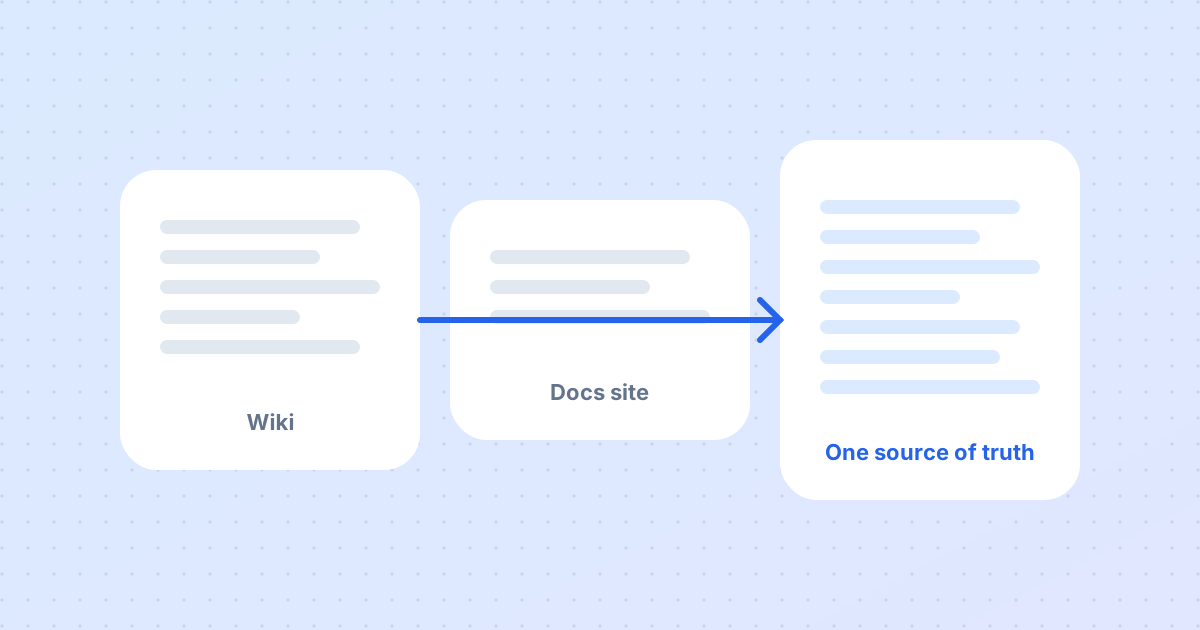
Migrating to DocOpsly without rewriting a single page
The most common worry from new customers is that migration means regenerating everything. It does not. Here is what actually happens in the first two weeks.
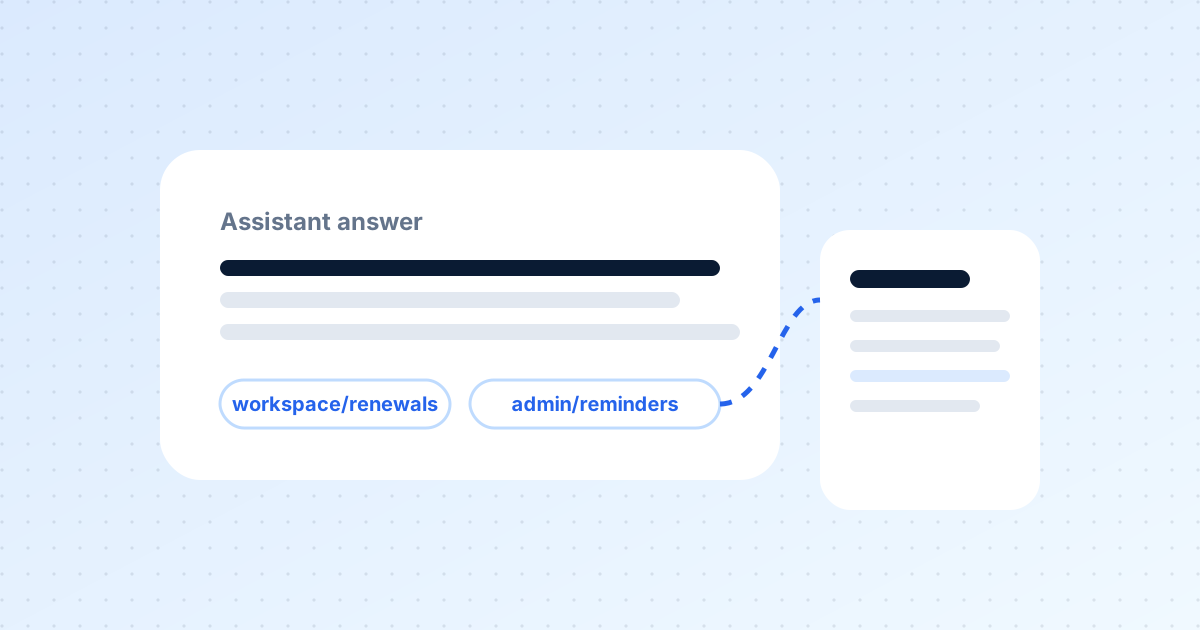
Documentation your assistants can actually trust
Support bots, internal helpdesks and content tools all read your docs. If the docs are stale, they amplify the error. Here is how citations change that.
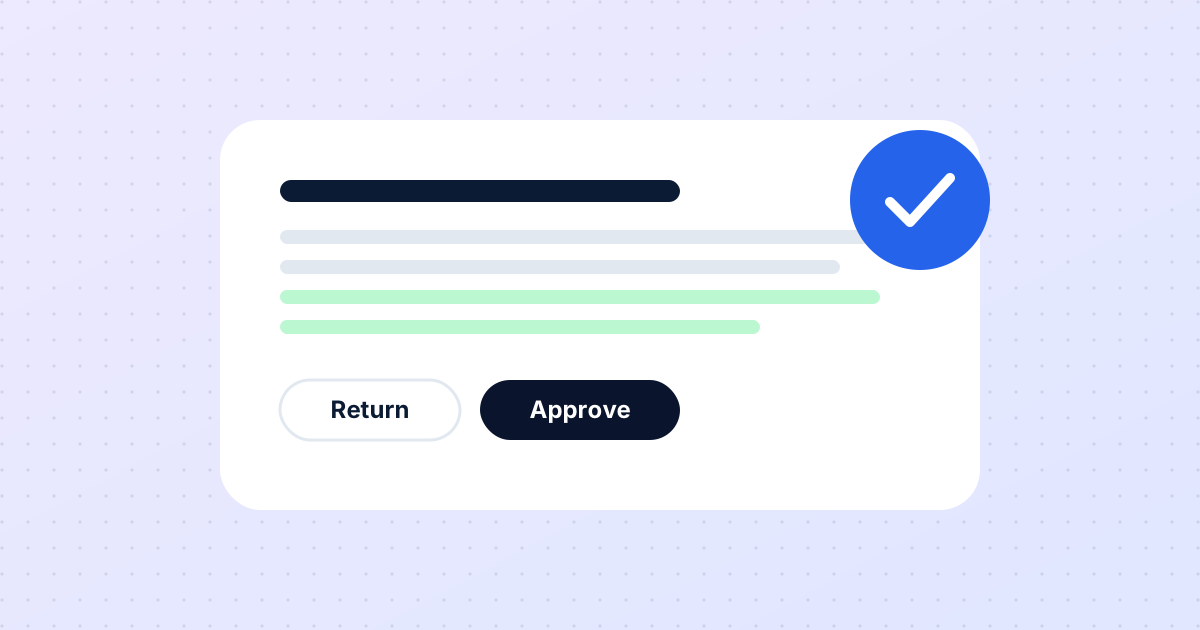
Human approval is not a safety feature. It is the product.
People sometimes ask when we will let agents publish directly. Never — and this post explains why that is a design decision, not a limitation.
Want this for your documentation?
Tell us about your product and how docs are handled today.
Contact us